The Long View: What a Winter of Cross-Country Reveals at Rendcomb
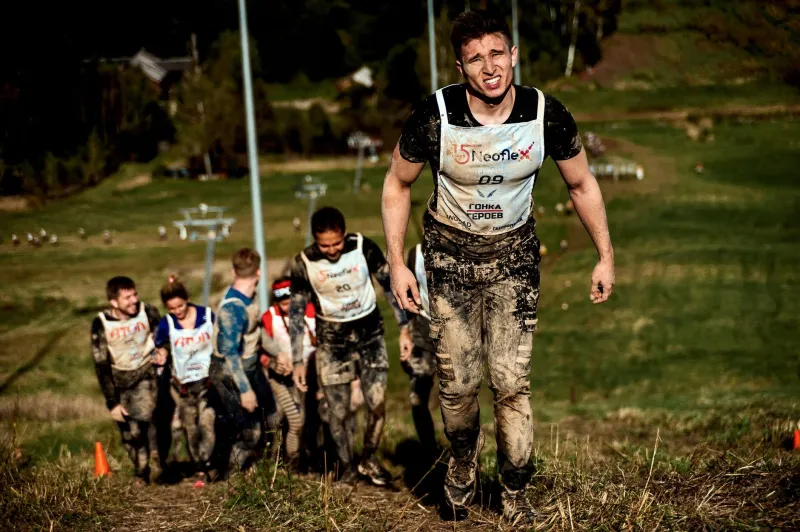
Cross-country has a way of exposing the difference between a quick burst and a lasting effort. On Rendcomb's estate, where routes can shift from firm tracks to heavy going within a few days, pupils in the 2026 winter season are discovering that progress is rarely linear. It is measured in returned forms, sensible starts, calm middle miles and the willingness to encourage a teammate who is finding the going harder than expected.
The season is not built around a single fixture. It is built around a rhythm: preparation, attendance, recovery and reflection. Coaches are keen to stress that competition matters, but it is not the only measure of a successful term. The aim is to develop runners who understand their own pace, can adapt to conditions and remain involved when the weather or the results are less than generous.
A route that asks different questions
The college's grounds provide a varied training environment, and that variety is part of the point. Pupils encounter changing surfaces, gradients and turns, all of which demand concentration rather than pure speed. A route that is quick in October may be slower and more demanding by November. Learning to read the ground, rather than simply attacking it, is one of the quieter lessons of the season.
Staff describe the estate as an advantage precisely because it is not a sterile running track. It teaches pupils to adjust. A muddy section encourages shorter, more careful strides. A long incline rewards patience. A descent requires control as much as courage. These are practical lessons, but they also carry a wider message: circumstances change, and good preparation includes the ability to respond to them.
Training for mixed abilities
Rendcomb's cross-country group brings together pupils with different levels of experience. Some arrive with a strong running background; others are trying the sport for the first time or using it to build general fitness. Coaches therefore avoid a one-size-fits-all session. The emphasis is on manageable effort, clear instruction and the confidence to work at an appropriate pace.
That approach can be less dramatic than a hard session for its own sake, but it is more sustainable. Pupils are encouraged to finish training knowing they could do a little more, rather than leaving everything on the course every week. Over a winter term, that restraint matters. It reduces the risk of illness and fatigue, and it helps pupils return with a sense of purpose rather than dread.
Mixed-ability training also changes the culture of the group. Faster runners are asked to be aware of those around them, while newer pupils are given permission to build gradually. The result is a squad in which effort is recognised across the field, not only at the front. Coaches can then balance competition with confidence: selecting fixtures where pupils can test themselves, while avoiding the temptation to measure every runner against the same benchmark.
The discipline of turning up
Much of the season's value lies in repetition. Turning up week after week, in colder conditions and with other commitments competing for time, is a discipline in itself. It is also where resilience becomes practical rather than rhetorical. Pupils learn that motivation is not always present at the start of a session, and that the habit of attending often carries them through the first ten minutes.
Staff are careful not to overstate this point. Cross-country is one part of a broad school life, and pupils are encouraged to balance training with academic work, music, drama and other commitments. Yet the principle remains useful. A season is built from ordinary weeks, not only from the days when everything feels easy. The pupil who arrives on a damp afternoon, completes the session and returns the following week is learning something that examinations and future workplaces will also require.
Competition without unnecessary pressure
Fixtures provide a focus, and pupils are rightly proud of strong performances. But coaches are equally interested in how runners approach the start line. A sensible opening pace, an awareness of the course and a willingness to keep working when positions shift are all signs of maturity. Results are posted, discussed and learned from, but they are not treated as the whole story.
That balance is particularly important in a school setting. Pupils develop at different rates, and a winter season can include setbacks as well as breakthroughs. Coaches therefore look for evidence of improvement in how a pupil prepares, recovers and responds to advice. A runner who finishes further back but maintains form and supports others may have made more progress than the finishing position suggests.
Supporting teammates beyond the results
The most telling moments often occur away from the finish line. A pupil waiting to cheer in a teammate, a quiet word before a race or a shared debrief afterwards all contribute to the group's sense of purpose. Cross-country can feel solitary in the middle of a race, but the season itself is a collective effort. The support of teammates makes the harder weeks more manageable and the better weeks more enjoyable.
Coaches have been keen to reinforce that point. Encouragement is not an add-on to competitive sport; it is part of how a squad functions. Pupils learn to read when a teammate needs space and when a teammate needs a reminder that the next session is still worth attending. Those small judgements are part of the broader education the season provides.
What stays after the season
When the winter term draws to a close, the results will be recorded and the mud will eventually dry. What remains is a set of habits: pacing, patience, preparation and the willingness to keep going. For some pupils, the season will lead to further competition. For others, it will confirm that sport can be a source of enjoyment and connection rather than pressure.
That is the long view Rendcomb is seeking to cultivate. Cross-country rewards those who learn to work within their own limits while remaining open to improvement. It asks for effort, but it also asks for judgement. In a season shaped by estate routes, mixed-ability training and the quiet discipline of turning up, pupils are gaining more than a set of times. They are learning how to approach a challenge steadily, and how to bring others with them.