Candlelight and Counterpoint: A Pupil-Written Premiere Takes Shape at Rendcomb
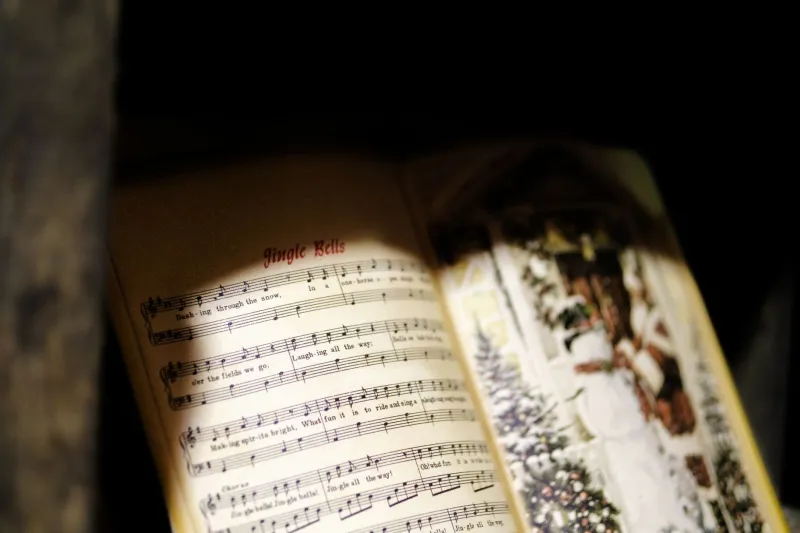
As Rendcomb College moves through the final weeks of the Michaelmas term, attention is turning to one of the most anticipated moments in the school calendar: the annual carol service. This December, the service will include a newly composed piece written by Sixth Form musicians in partnership with the music department, adding a fresh voice to a tradition that has long brought pupils, staff, families and friends together.
The commission is not simply an exercise in composition. It is a live project with a fixed date, a defined ensemble and an audience in the College Chapel. For the pupils involved, it has offered an unusually direct experience of what it means to write music that must be rehearsed, refined and performed. For the College, it represents a deliberate investment in pupil creativity at the heart of a much-loved occasion.
Starting with a Single Line
The project began in the autumn term with a simple brief: write a short carol that would sit naturally within the service while bearing the distinct imprint of its young composers. The pupils were encouraged to study existing carols not as fixed texts but as models of craft—how a melody can carry a congregation, how a refrain can settle in the memory, and how harmony can support rather than overwhelm a sense of occasion.
From there, the work moved through sketches, fragments and drafts. One pupil described the initial stage as learning to trust small ideas. A melodic phrase that seemed slight at the piano might, once harmonised for voices or instruments, reveal a different weight. Another spoke of the difficulty of knowing when to stop adding to a piece, and of discovering that restraint can be as expressive as elaboration.
The music department provided structure without imposing a house style. Pupils were given regular feedback on notation, pacing and texture, and were asked to justify their choices in musical terms. The result is a work that reflects the pupils’ own instincts while remaining practical for the performers and appropriate for the setting.
The Discipline of a Deadline
Composition can appear solitary, but a commission for a live service is inherently collaborative. The pupils have had to work with singers and instrumentalists, consider rehearsal time and respond to the acoustic of the Chapel. They have also had to meet deadlines that do not move: the service date is fixed, and the music must be ready in time for adequate rehearsal.
That pressure has been instructive. Staff noted that the pupils have learned to distinguish between a private draft and a performable score. They have had to make decisions legible to others, to accept that a passage may need simplifying, and to listen to feedback without treating it as a verdict on their ideas. These are lessons that transfer well beyond music, from essay writing to group projects and public speaking.
For the performers, the experience has also been a reminder that new music requires curiosity. Singers and instrumentalists have had to interpret a score that has no performance history, relying on the composer’s markings and the conductor’s direction. That shared responsibility has strengthened the sense of common purpose that the carol service already embodies.
Tradition as a Living Conversation
At a school with Rendcomb’s sense of history, tradition can sometimes be mistaken for something static. The carol service tells a different story. It endures because it is renewed each year by the people who take part, whether through readings, arrangements, performances or the simple act of gathering in candlelight.
The new composition does not seek to displace the familiar carols that congregations know and love. Instead, it sits alongside them as a reminder that tradition is a conversation between past and present. The service will still include the music that families return for year after year, but it will also make room for something that did not exist before this term—a piece shaped by pupils who are currently walking the College corridors.
Staff reflections on the project have emphasised that creative ownership is not a decorative extra. When pupils are asked to make something for a real audience and a real occasion, they engage more deeply with the standards of their discipline. They learn that quality emerges through revision, that collaboration requires clarity, and that performance is an act of communication rather than a test of perfection.
What the Final Rehearsal Revealed
As rehearsals moved towards the final stages, the focus shifted from notation to breath, balance and timing. The pupils heard their work in the room rather than in their imaginations, and made small but significant adjustments. A phrase was opened out; a dynamic was softened; an entry was clarified. These changes were not signs of uncertainty but of growing editorial judgement.
The final rehearsal also brought the project’s wider value into focus. Pupils from different year groups worked alongside one another, staff and students negotiated musical decisions respectfully, and the piece began to belong to the performers as much as to its composers. That transition—from private sketch to shared experience—is at the heart of what the commission has taught.
When the carol service takes place this December, the new work will be one part of a larger whole. Yet its presence will signal something important about Rendcomb’s approach to pupil achievement: that students are not only prepared for performances but invited to help create them. The result is a service that honours the past while allowing the present to speak in its own voice.