Acres of Advantage: How Rendcomb's Grounds Bring the Curriculum to Life
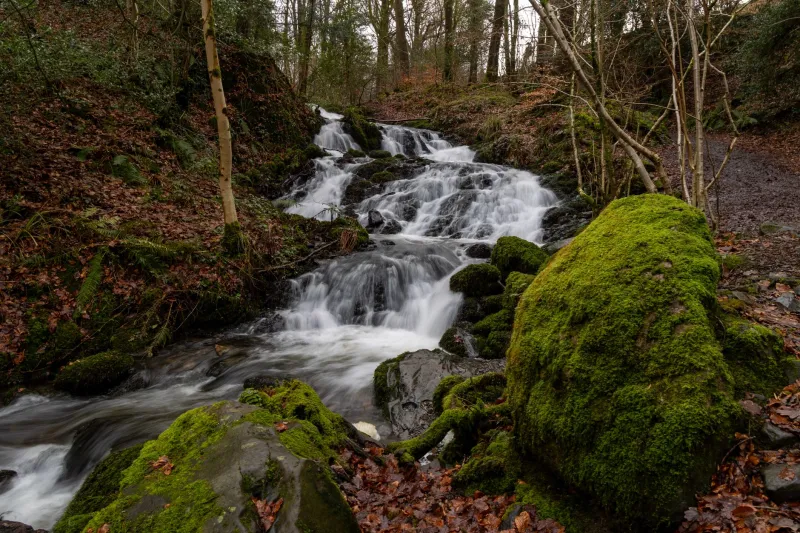
On a bright autumn morning, a group of Year 9 geographers from Rendcomb College is not gathered around a whiteboard but standing beside a shallow stream, measuring tape stretched between two banks. Their task is to calculate discharge: the volume of water moving through the channel each second. It is practical, messy and memorable, and it is exactly the kind of lesson that the college's 230-acre estate makes possible.
Rendcomb has long been proud of its setting in the Gloucestershire countryside. But the estate is not merely a handsome backdrop to school life. Across science, art, geography and physical education, teachers treat the grounds as a teaching resource: a place where abstract ideas become tangible and where pupils learn to observe, test, record and reflect.
Fieldwork beyond the classroom
Geography provides perhaps the clearest example. Classes use the estate's streams and slopes to study river processes, land use and microclimate. Pupils measure channel width, depth and velocity at several points, compare results and discuss how soil, vegetation and land management affect flow. Back in the classroom, the data is plotted and analysed—but the memory of cold fingers and rushing water gives the graphs meaning.
'When you are measuring a stream, you cannot simply guess the answer,' says one Year 10 pupil. 'You have to check, repeat and explain what you found. It makes the theory make sense.'
Science lessons follow a similar pattern. In ecology, pupils use quadrats to sample grassland and woodland areas, identifying species and considering biodiversity. Autumn leaf litter becomes a study in decomposition; soil samples reveal texture and pH. As winter approaches, pupils will take part in bird counts, recording species and numbers at set points around the estate. The exercise teaches patience, careful observation and the importance of consistent records.
Art lessons move outdoors too. Pupils sketch avenues, tree lines and architectural details, using the changing light to explore perspective, tone and colour. Photography students document seasonal change, while printmakers gather natural forms for texture studies. The results are not simply decorative; they are evidence of sustained looking.
Physical education uses the grounds for orienteering, cross-country running and team challenges. Map reading, route planning and pacing require pupils to think under pressure and work together. For some, the experience is a first taste of leadership; for others, it is a chance to build resilience over distance.
Confidence, curiosity and the unexpected
Outdoor learning is not a treat bolted onto the timetable. Teachers plan it purposefully, with clear objectives, risk assessments and appropriate clothing. The aim is not novelty for its own sake but a richer understanding of the subject—and, often, a shift in how pupils see themselves.
'The outdoors changes the conversation,' says a member of the geography department. 'Pupils who are quiet in class often become the ones asking questions outside. They notice things. They make connections. You can see confidence growing in real time.'
That confidence can be quiet and cumulative. A Year 8 pupil recalls a bird count with unusual clarity. 'I remember it more than most lessons,' they say. 'You have to be patient and quiet, and then you suddenly notice things you would normally walk past. I still listen for birds at home now.'
Such moments matter. They support wellbeing, encourage teamwork and give pupils a sense of stewardship for the natural world. They also reinforce the college's belief that learning should be active, purposeful and connected to place.
An estate-wide effort
Making this work depends on colleagues across the college. Groundskeepers advise on safe routes, habitats and seasonal conditions. Catering staff provide early breakfasts and packed lunches for longer fieldwork sessions. IT technicians prepare devices for data collection and recording. Behind every successful outdoor lesson is a network of practical support.
As autumn fieldwork gives way to winter bird counts, the message is clear: at Rendcomb, the estate is not just where lessons happen. It is part of what pupils learn—and, often, what they remember long after the lesson ends.