At the Pass: How Rendcomb's Catering Team Turns Meals into Community
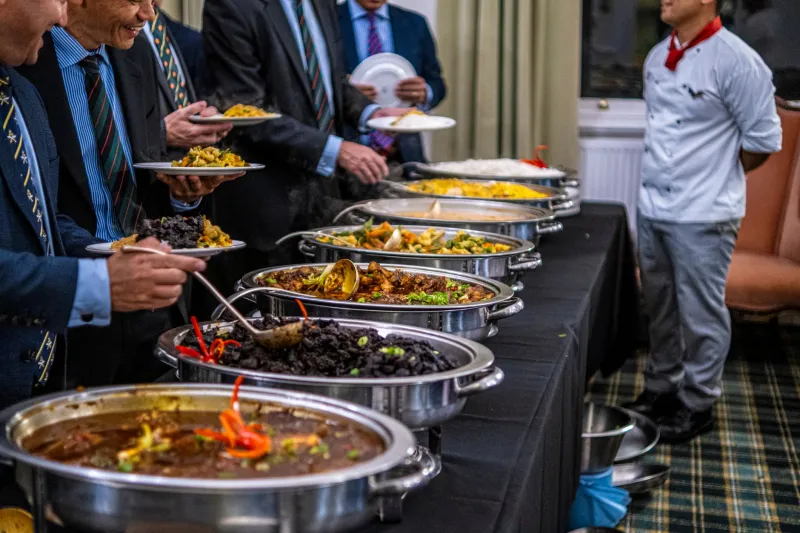
At midday, the dining hall at Rendcomb College becomes one of the busiest rooms on site. Trays pass along the servery, tables fill in loose clusters, and the noise level rises by a degree or two. It is easy to read this simply as the middle of the school day. The catering team, however, tends to see it as the point at which several strands of school life meet: nutrition, pupil voice, local supply, pastoral care and the ordinary business of people eating together.
The kitchen is not usually the first place families look when they want to understand a school's values. Yet a dining hall is a revealing place. It shows how an institution treats routine, how it listens, how it handles difference and how it thinks about the people who work behind the scenes. In the current autumn term, with the days shortening and the campus settling into its winter rhythms, those questions feel especially pertinent.
A kitchen that listens
Menu planning in a school is sometimes imagined as a simple matter of filling a rota. In practice, it is closer to a consultation exercise with a very large and very opinionated household. Rendcomb's catering team runs pupil tasting sessions, gathers feedback through the year and adjusts dishes before they reach the main menu. The point is not to turn the dining hall into a restaurant. It is to recognise that pupils are the people eating the food, and that their views are useful evidence.
That process has to be balanced against nutritional standards, cost, allergen management and the practical limits of a busy kitchen. A popular request may not be feasible in the quantities required, or may not fit the broader menu cycle. The team's role is to weigh those factors rather than simply accept or reject them. The result is a menu that is neither a pupil plebiscite nor a catering decree, but a working compromise.
Allergen management sits at the centre of that work. For pupils with allergies or medical dietary needs, the dining hall must be a place of confidence rather than uncertainty. Clear labelling, separate preparation where required and close communication with families and pastoral staff are not optional extras. They are part of the basic contract between a school and the people it feeds.
The short chain
Rendcomb's setting in Gloucestershire is not merely scenic. It shapes what the kitchen can buy. The catering team works with suppliers in the county and the wider Cotswolds where possible, and the menu tends to follow the seasons rather than fight them. That approach supports freshness and reduces some of the distance between producer and plate, though it is not a complete answer to every question about sustainability or cost.
Local sourcing is often presented as a straightforward virtue. In reality, it involves trade-offs. A supplier may be nearby but unable to meet the volume required; a seasonal ingredient may be excellent in October and unavailable in February. The team's job is to make those judgements transparently and pragmatically, rather than to use provenance as a marketing slogan.
There is an educational dimension here too. When pupils see seasonal food on the menu, or learn where a product has come from, the dining hall becomes a quiet extension of the curriculum rather than a break from it. Food is a practical subject as well as an academic one, and schools are increasingly alert to the value of helping young people understand what they are eating and why.
The rituals of the table
Much of the daily work of community happens at mealtimes without anyone announcing it. Pupils sit with their houses, staff take their places alongside them, and conversation moves between the trivial and the serious. For boarders, breakfast and weekend meals carry an additional weight: they are part of the rhythm that makes a school feel like a home rather than a workplace with bedrooms.
The pastoral value of that rhythm is difficult to measure but hard to miss. A pupil who is quietly struggling may not raise a hand in class, but may be noticed at lunch. A new arrival may find it easier to join a table than to join a conversation in a corridor. Mealtimes offer a low-stakes setting in which relationships can form and adults can check in without formality.
That is not to romanticise the dining hall. It can be noisy, rushed and socially complicated, like any communal space. But the routines around it - the queue, the shared table, the clearing of plates - give pupils a structure within which to practise consideration for others. The catering team contributes to that structure every day, often before the first pupil has arrived.
Beyond the plate
The kitchen is an operational department, but it is also an educational one. Food waste, portion size and sustainability are discussed in classrooms and acted on in the dining hall. Pupils may take on responsibilities linked to service or hospitality, and the annual pattern of themed meals and seasonal events gives the school calendar some of its texture.
None of this happens by accident. It depends on a team that starts early, manages complex logistics and remains calm when the queue is longer than expected. The work is not glamorous, but it is foundational. A school that feeds people well is doing something more than meeting a basic need; it is modelling reliability, attention and care.
A shared standard
Rendcomb's catering operation will not please every palate every day, and it does not claim to. Its value lies in the standard it maintains: food that is safe, varied and thoughtfully sourced; a service that accommodates difference; and a team that treats mealtimes as part of school life rather than an interval between lessons.
As the autumn term moves towards its close, the dining hall will continue to do what it does every day. Trays will pass along the servery. Tables will fill. The conversation will rise and fall. In all of that, the kitchen is quietly doing its part to bring everyone to the table - not simply to eat, but to belong.